

Types of Charging Cables Explained
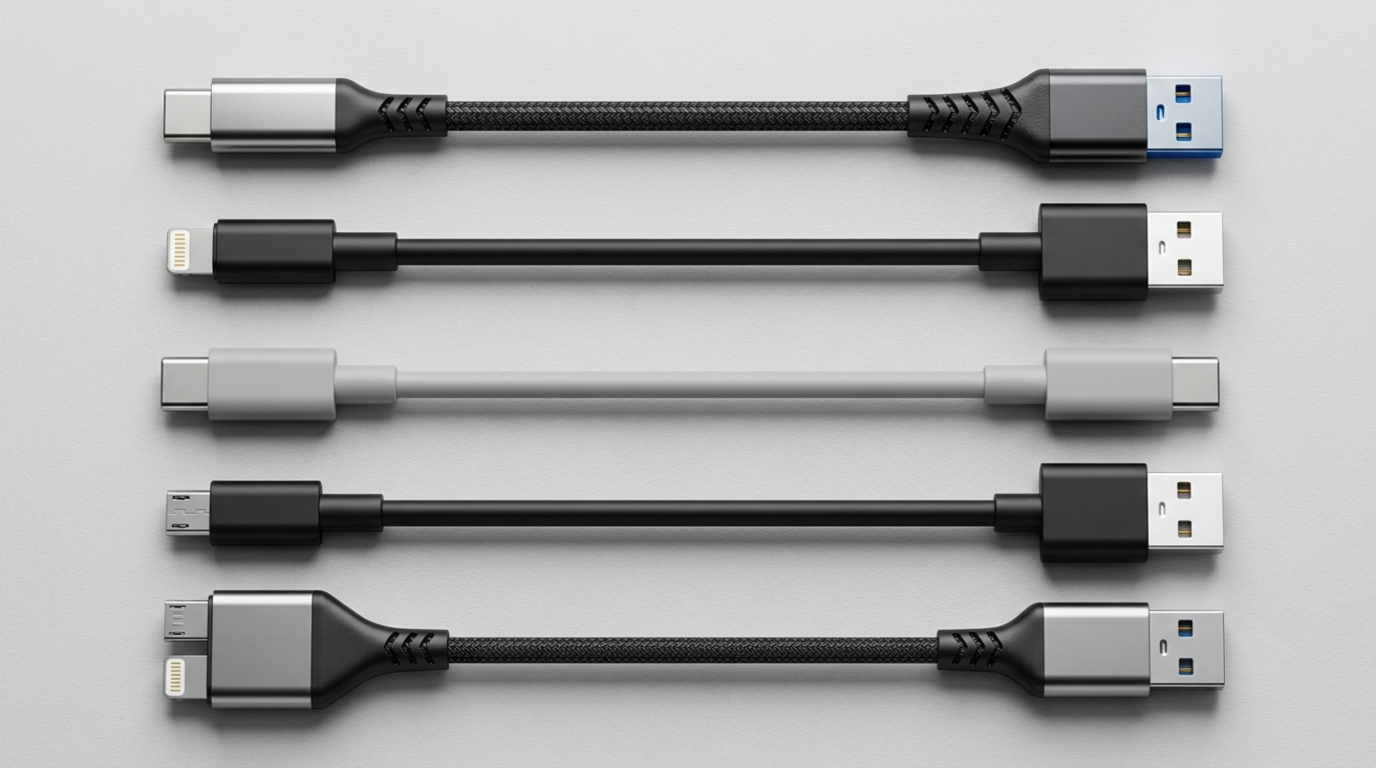
Charging cables may look similar, but they’re designed for different devices and charging technologies. Understanding the differences helps you choose the right cable for faster charging and reliable data transfer.
USB-A
USB-A is the traditional connector found on many older chargers and computers. While still widely used, it generally supports slower charging compared to newer standards.
USB-C
USB-C has become the universal connector for most modern smartphones, tablets, laptops, and accessories. Benefits include:
- Faster charging
- Faster data transfer
- Reversible connector
- Wide compatibility
Lightning Cable
Lightning cables are designed specifically for Apple devices such as iPhones and some iPads. They provide reliable charging and syncing when paired with certified accessories.
Fast Charging Support
Not every cable supports fast charging. Look for cables that specifically mention:
- USB Power Delivery (PD)
- Quick Charge (QC)
- High-speed charging
- Data transfer support
Cable Length Matters
Longer cables are convenient but can sometimes reduce charging efficiency. For the best performance, choose cable lengths that suit your daily use without unnecessary excess.
Final Thoughts
The right cable improves charging speed, data transfer, and overall device performance. Choosing quality cables also reduces wear and extends their lifespan.
Looking for a Reliable Fast Charger?
Shop our range of certified, fast-charging chargers with fast delivery across Africa.